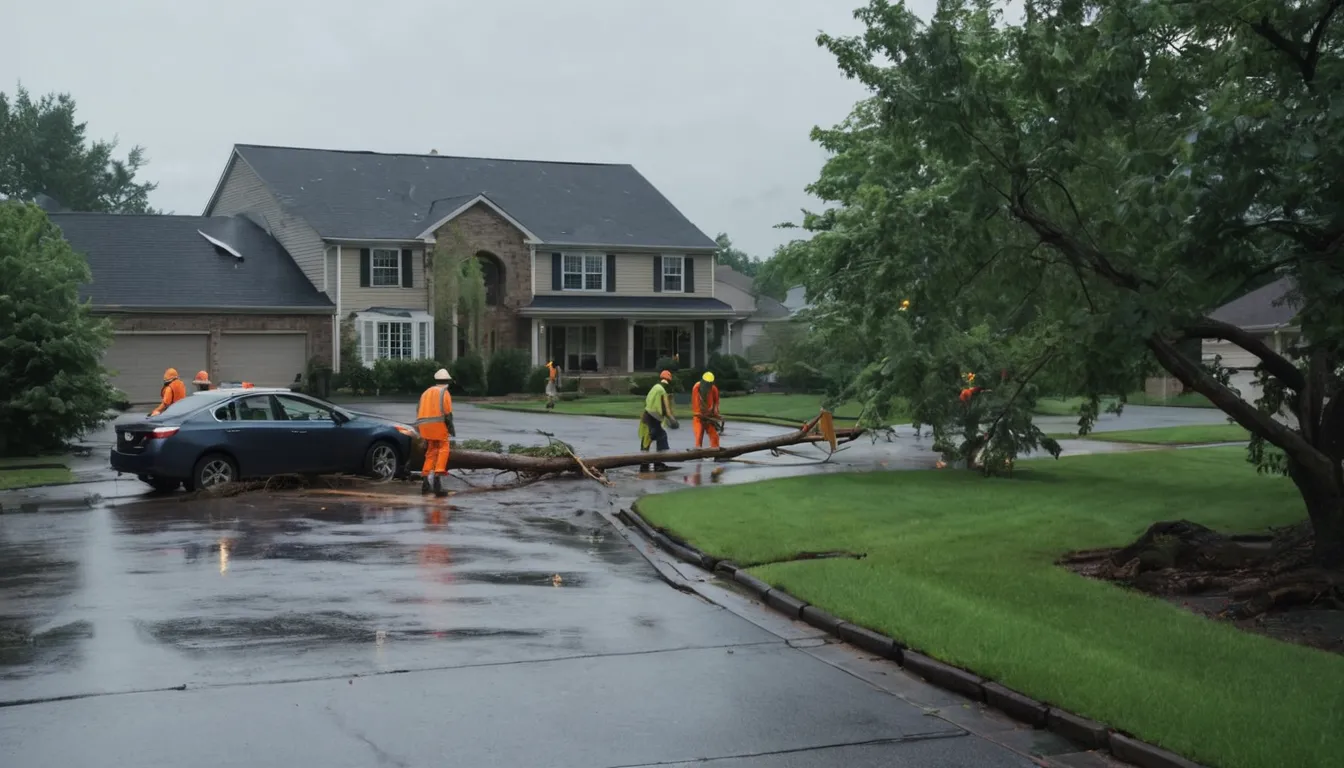
Need tree removal in Independence?
Request an estimate or email contact@departmenturban.living. Tell us about the tree and a provider in our network will follow up to plan the work.
No obligationRequest an estimate today
Tree removal is the safe cutting down and clearing of a tree that is dead, damaged, diseased or too close to your home. Independent providers in our network handle the work. Departmenturban Tree Service does not. We match you with a local provider and keep the process short.
Most households do not have spare hours for phone tag. So the steps are simple: tell us about the tree, get matched, then receive a written quote. Providers in the Independence area deal with heavy snow, deep frost, humid summers and severe storms, so they know what local trees go through. You choose the date that suits your week.
Some trees can wait for a planned visit. Others cannot. Check for these signs first:
If any of these apply, keep people and vehicles out of the fall zone. Stay well back from anything touching a power line and contact the utility.
Request a callback to check provider availability.
Most removals come down to safety or property protection. Dead and diseased trees drop limbs without warning. Storm-split trunks can fail on the next gust. Roots can crack drain lines and push against foundations, which matters with full basements and sump pumps. Some people simply need space for a repair, an addition or a driveway.
Bark falling off in sheets, mushrooms at the base and a hollow sound when you tap the trunk all point to decay. So does a crown with few leaves in summer while neighbors' trees are full. A provider can assess the tree and tell you whether trimming is enough.
The process has four parts:
The wording "matched, then quoted" is deliberate. You see a price before anything starts.
*Felling* means cutting the tree so it falls in one piece. It needs open space. *Sectional removal* means climbing or using a lift, then cutting the tree down in pieces and lowering each one on ropes. This is common on narrow city lots, near houses and around wires.
Several things move the number up or down:
Prices vary by job, so get a written quote that lists what is included.
Some cities protect large or older trees, and some require a permit even on private land. Trees near a road or utility line may have extra rules. Ask the provider what is needed in your area. Many are familiar with local requirements and can point you to the right office.
Ask each provider the same short list of questions:
Be cautious of anyone who wants full payment up front or knocks on your door after a storm.
Some policies may cover sudden damage, such as a tree that falls on a house. Check your policy for details. Providers can often help document damage with photos and an itemized invoice for a claim.
Tell the provider about your routine. Early starts may suit a household with a school run. A weekday may suit a family that is out all day. Ask how long the work should take and whether you need to be home. Many jobs are done in a few hours, though large trees take longer.
A little preparation keeps the day smooth:
The provider walks the site and confirms the plan. Crew members set up safety zones, then cut and lower the wood. Chippers can be loud, so plan for noise. Stay inside and keep children away from the work area until the provider says it is clear.
Winter can be a practical time to remove a tree. Frozen ground carries heavy equipment with less lawn damage, and bare branches are easier to see. Spring thaw can leave soil soft, so access may be harder. After summer storms, providers may be busy, so plan ahead for trees that are only at risk.
Walk the site with the provider. Check that branches, sawdust and small debris are cleared as quoted. Decide what to do with the wood: haul-away, firewood or mulch. If a stump remains, ask about grinding while the equipment is nearby.
Ready to plan the job around your schedule?
Your matched provider puts the price and scope in writing before any work is booked.
Providers use sectional cutting or rigging when space is tight or the tree is near buildings.
Many quotes cover branch removal, chipping and raking. Confirm exactly what is included.
Ask whether stump grinding is included or priced separately, so there are no surprises.
These are typical U.S. ranges, not quotes. Tree size, access, tree health and local rates all change the final number, so always get a written quote that lists what is included.
| Item | Typical range | Notes |
|---|---|---|
| Small tree (under 30 ft) | $150 – $600 | Easy access, open space |
| Medium tree (30–60 ft) | $500 – $1,500 | Most common residential job |
| Large tree (60 ft and up) | $1,200 – $3,500 | Often needs sectional removal |
| Tree near house or wires | $1,500 – $5,000+ | Lift or crane may be needed |
| Debris haul-away | $75 – $400 | Sometimes included in the quote |
| Local permit, if required | $25 – $200 | Rules differ by city |
Tell us the tree's location, size and any worries, such as lean, cracks or nearby wires.
Departmenturban Tree Service connects you with an independent provider in Independence who handles jobs like yours.
The provider assesses the tree and gives a written price. There is no obligation to accept.
Choose a time that suits your household, then prepare the site as the provider advises.
Choose a date that fits school, work and family routines, not the other way around.
You see a written price from the matched provider before you commit to anything.
Providers in our network work in the Independence area and understand local weather, soil and housing.
One request form, one matched provider, and clear next steps.
Request an estimate or email contact@departmenturban.living. Tell us about the tree and a provider in our network will follow up to plan the work.
No obligationTypical U.S. prices run from about $150 for a small tree to $3,500 or more for a large one, and higher near buildings or wires. Access, tree health and haul-away change the total, so get a written quote.
It depends on your city. Some protect large or older trees, even on private land. Ask the provider or your local office before work begins.
Many small and medium trees come down in a few hours. Large trees, tight access or heavy cleanup can take longer. Ask the provider for a time estimate when you review the written quote, and plan around it.
Request an estimate or email contact@departmenturban.living. Tell us about the tree and a provider in our network will follow up to plan the work.
No obligation